Customers who viewed this item also viewed
Buy New
$16.99$16.99
FREE delivery Saturday, July 18 on orders shipped by Amazon over $35
Ships from: Amazon.com Sold by: Amazon.com
Used - Good
$6.04$6.04
FREE delivery Saturday, July 18 on orders shipped by Amazon over $35
Ships from: Amazon Sold by: Goodbooks Company
Return this item for free
We offer easy, convenient returns with at least one free return option: no shipping charges. All returns must comply with our returns policy.
Learn more about free returns.- Go to your orders and start the return
- Select your preferred free shipping option
- Drop off and leave!
Sorry, there was a problem.
There was an error retrieving your Wish Lists. Please try again.Sorry, there was a problem.
List unavailable.
Download the free Kindle app and start reading Kindle books instantly on your smartphone, tablet, or computer - no Kindle device required.
Read instantly on your browser with Kindle for Web.
Using your mobile phone camera - scan the code below and download the Kindle app.
Follow the authors
OK
A Bright Future: How Some Countries Have Solved Climate Change and the Rest Can Follow
Purchase options and add-ons
As climate change quickly approaches a series of turning points that guarantee disastrous outcomes, a solution is hiding in plain sight. Several countries have already replaced fossil fuels with low-carbon energy sources, and done so rapidly, in one to two decades. By following their methods, we could decarbonize the global economy by midcentury, replacing fossil fuels even while world energy use continues to rise. But so far we have lacked the courage to really try.
In this clear-sighted and compelling book, Joshua Goldstein and Staffan Qvist explain how clean energy quickly replaced fossil fuels in such places as Sweden, France, South Korea, and Ontario. Their people enjoyed prosperity and growing energy use in harmony with the natural environment. They didn't do this through personal sacrifice, nor through 100 percent renewables, but by using them in combination with an energy source the Swedes call käkraft, hundreds of times safer and cleaner than coal.
Clearly written and beautifully illustrated, yet footnoted with extensive technical references, Goldstein and Qvist's book will provide a new touchstone in discussions of climate change. It could spark a shift in world energy policy that, in the words of Steven Pinker's foreword, literally saves the world.
- Print length288 pages
- LanguageEnglish
- PublisherPublicAffairs
- Publication dateNovember 17, 2020
- Dimensions5.5 x 0.75 x 8.25 inches
- ISBN-101541724119
- ISBN-13978-1541724112
Book recommendations, author interviews, editors' picks, and more. Read it now.
Frequently bought together

Customers who viewed this item also viewed
- Power to Save the World: The Truth About Nuclear EnergyHardcoverFREE Shipping on orders over $35 shipped by AmazonGet it as soon as Sunday, Jul 19Only 1 left in stock - order soon.
Customers also bought or read
- Earth is a Nuclear Planet: The Environmental Case for Nuclear Power
Paperback$15.99$15.99Delivery Sat, Jul 18 - Power to Save the World: The Truth About Nuclear Energy (Vintage)
Paperback$12.03$12.03Delivery Jul 26 - 29 - The Grid: The Fraying Wires Between Americans and Our Energy Future
Paperback$16.05$16.05Delivery Jul 28 - 30 - Not the End of the World: How We Can Be the First Generation to Build a Sustainable Planet
Hardcover$15.03$15.03Delivery Sat, Jul 18 - Shorting the Grid: The Hidden Fragility of Our Electric Grid
Paperback$19.65$19.65Delivery Sat, Jul 18 - Atomic Dreams: The New Nuclear Evangelists and the Fight for the Future of Energy
Hardcover$15.01$15.01Delivery Sat, Jul 18 - Drawdown: The Most Comprehensive Plan Ever Proposed to Reverse Global Warming
Paperback$12.88$12.88Delivery Jul 20 - 21 - Electrify: An Optimist’s Playbook for Our Clean Energy Future
Paperback$11.06$11.06Delivery Sat, Jul 18 - Rad Future: The Untold Story of Nuclear Electricity and How It Will Save the World
Hardcover$15.76$15.76Delivery Jul 24 - 29 - Seeing the Light: The Case for Nuclear Power in the 21st Century
Paperback$20.19$20.19Delivery Sat, Jul 18 - Here Comes the Sun: A Last Chance for the Climate and a Fresh Chance for Civilization#1 Best SellerEnergy Policy
Hardcover$13.39$13.39Delivery Sat, Jul 18 - The War Below: Lithium, Copper, and the Global Battle to Power Our Lives
Paperback$15.99$15.99Delivery Sat, Jul 18 - Unsettled (Updated and Expanded Edition): What Climate Science Tells Us, What It Doesn't, and Why It Matters
Paperback$13.10$13.10Delivery Sat, Jul 18 - Chip War: The Fight for the World's Most Critical Technology#1 Best SellerMicroprocessor Design
Hardcover$14.97$14.97Delivery Sat, Jul 18 - The Rise and Fall of Classical Greece (The Princeton History of the Ancient World)
Paperback$15.11$15.11Delivery Tue, Jul 21 - How to Avoid a Climate Disaster: The Solutions We Have and the Breakthroughs We Need
Paperback$11.47$11.47Delivery Sat, Jul 18
From the Publisher
Editorial Reviews
Review
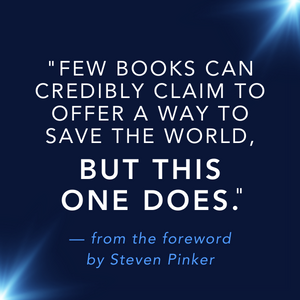
"A Bright Future starts with a bang. 'Few books can credibly claim to offer a way to save the world, but this one does,' the psychologist Steven Pinker writes in his foreword. That is a bold assertion, but by the time I had finished the book, I was half-convinced he was right."―Ed Crooks, Financial Times
"A Bright Future addresses the fears that people have around nuclear as an energy source and illuminates a path to making it a more significant part of our energy portfolio. It is a must-read for anyone who wants to preserve the planet for our children and grandchildren."―Christine Todd Whitman, former head of the EPA
"A Bright Future lays out the only viable path that has been proposed for rapid global decarbonization."―James Hansen, climate scientist, Columbia University
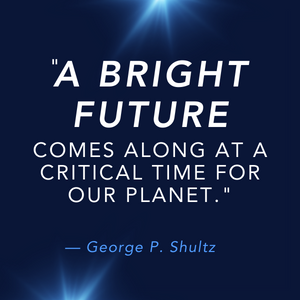
"A Bright Future comes along at a critical time for our planet. Its key message: the climate is changing, the consequences are serious, and we can and must take action."―George P. Shultz
"A rational if somewhat unlikely strategy to reverse global warming using current technology and without self-denial... The authors argue for nuclear power, and the facts are certainly on their side....A reasonable argument directed at a lay audience."―Kirkus Reviews
"Goldstein and Qvist offer food for thought, making this a viable resource in the arsenal of arguments for and against the best methods of staving off a global energy crisis."―Booklist
About the Author
Staffan A. Qvist is a Swedish engineer, scientist and consultant to clean energy projects around the world. He has lectured and authored numerous studies in the scientific literature on various topics relating to energy technology and policy, nuclear reactor design and safety, and climate change mitigation strategies -- research that has been covered by Scientific American and many other media outlets. Trained as a nuclear engineer (Ph.D., University of California, Berkeley), he is now involved in renewable energy development projects and also works with several "fourth generation" nuclear start-ups. For more information, see www.staffanqvist.com.
Product details
- Publisher : PublicAffairs
- Publication date : November 17, 2020
- Language : English
- Print length : 288 pages
- ISBN-10 : 1541724119
- ISBN-13 : 978-1541724112
- Item Weight : 8.9 ounces
- Dimensions : 5.5 x 0.75 x 8.25 inches
- Best Sellers Rank: #1,250,579 in Books (See Top 100 in Books)
- #21 in Coal Energy
- #35 in Energy Policy (Books)
- #147 in Environmental Policy
- Customer Reviews:
About the authors

Joshua S. Goldstein is professor emeritus at the School of International Service at American University, winner of the International Studies Association "Book of the Decade" award, among others, author of International Relations (10th edition), and a research scholar at the University of Massachusetts. He lives in Amherst, Massachusetts. His book Winning the War on War (2011), shows that despite the gory headlines the decade after 9/11 was the most peaceful worldwide in a century. His book The Wounds Within (2015) discusses veterans and PTSD. His 2019 book A Bright Future shows how to apply the successful model of Sweden and France to address climate change.

Discover more of the author’s books, see similar authors, read book recommendations and more.
Customer reviews
Customer Reviews, including Product Star Ratings help customers to learn more about the product and decide whether it is the right product for them.
To calculate the overall star rating and percentage breakdown by star, we don’t use a simple average. Instead, our system considers things like how recent a review is and if the reviewer bought the item on Amazon. It also analyzed reviews to verify trustworthiness.
Learn more how customers reviews work on AmazonCustomers say
Generated from the text of customer reviewsSelect to learn more
Top reviews from the United States
- 5 out of 5 stars
Great book for general concepts and for convincing people nuclear power is the way to go
Reviewed in the United States on November 15, 2019If you’re interested in a book that gives you a mostly realistic view of how to implement nuclear power in order to tackle climate change, then A Bright Future does a pretty good job. While I disagree with a few pages/lines that seem to be “apocalyptic” about the effects of climate change and how fast we need to act, it didn’t go as overboard as I expected it to. This book provides a very quick overview of climate change and its problems, which is really all you need in order for this book to be effective.
I don’t want to provide any spoilers, but how they introduce nuclear power is actually pretty funny/cool. I was like “what are they talking about??” for the whole chapter, until finally it clicked. Haha. The book basically gets broken down into a few countries/regions that are doing things right when it comes to climate change/nuclear power (Sweden, France, Ontario) and compares them to the rest of the world. While this isn’t the most fair comparison (due to geographic differences, population differences, and others between the countries), it does get the point across and makes the reader actually contemplate things. The book really opened my eyes to the failures when it comes to other countries, like Germany (phasing out nuclear power when it has tons of coal to get rid of), and how the only alternative to nuclear power is either hydropower or fossil fuels (mainly because nuclear power can provide on-demand power) and the only other fuels that can do that are hydro and fossil fuels; Solar/wind are highly dependent on the weather and are not reliable enough to be strictly coal replacements). This means that we need to essentially always compare nuclear power to fossil fuels (as hydropower is super geographic dependent). Therefore, when compared to coal/methane, for the most part, nuclear power always wins. Whether it be energy cost, efficiency, waste production, manpower, maintenance, safety, etc, nuclear power almost always wins (things like upfront costs are higher for nuclear power, but I’m ignoring those because this is clearly a long-term investment). There are some sections dedicated to how certain countries (like China and Russia) are doing a good job at building more power plants (or at least more efficient ones), but other sections that recommend other solutions to these countries in order to expedite their reliance on nuclear power.
In the last third of the book, the authors spend a good amount of time “debunking” some myths, with the biggest one being safety. I was always skeptical when it came to safety, but after reading this book I’m convinced the lives lost due to fossil fuels every year is much higher than that from nuclear power. It goes even further to “poke fun” at the antinuclear activists who want the plants to shut down, but who also want “zero emission energy”. The authors make a good pitch as to why these activist groups are highly mistaken and are being scientifically daft. For example, Germany started shutting down its nuclear power plants due to Fukushima, but the book makes it clear that this was solely an emotional response and not one based on sound science.
The book is a super easy read and could honestly be read within a few days if you dedicate a few evenings to it. While I don’t know how scientifically accurate it all is (as I didn’t go too deep into the references and I’n not a nuclear power expert), it does make some upfront points that I agree with as a fellow scientist. I would highly recommend this book to anyone looking for a good overview of nuclear power and how it can alter the path of climate change for the better in a relatively short amount of time. Of note, this book isn’t super helpful if you really want some in-depth knowledge on nuclear power and the different types and all of that. I would still read this book first though as it covers the general concepts.
8 people found this helpfulSending feedback...Sending feedback...HelpfulThank you for your feedback.Sorry, we failed to record your vote. Please try againThanks, we'll investigate in the next few days.Sorry, We failed to report this review. Please try again - 5 out of 5 stars
This book lays out the path to a clean-energy future in terms that are clear and easy to read.
Reviewed in the United States on July 15, 2019That's just what I'd expect from an engineer and a professor of international relations.
The role model for this transformation is Sweden. In 2014, Sweden emitted only half the CO2 of Germany (roughly 5 vs. 10 tons per capita.) The two countries had nearly identical per-capita GDP (US$50,000).
How did Sweden do it? Kärnkraft! OK, no need to be coy, and anyway it's likely easy to guess: Kärnkraft is Swedish for nuclear power. By managing intelligently at the system level, Sweden keeps the costs of the plants lower than in the U.S. Other countries have done this too.
Nuclear power is nothing to treat casually, of course. Waste disposal is still a vexing problem, and will be for some time. But the authors point out a paradox: coal power causes many deaths but is perceived as generally safe, while nuclear power kills fewer people but is perceived as very dangerous.
"So this, then, is the safety record of nuclear power over more than fifty years, encompassing more than 16,000 reactor-years: one serious fatal accident in the USSR with possibly, over time, up to 4,000 deaths; one Japanese 'disaster' that caused no deaths; and one American accident that destroyed an expensive facility but otherwise just generated vast quantities of fearful hype. In the United States, [commercial] nuclear power continues to produce about one-fifth of the nation's electric supply and has never killed anyone." (page 93)
The authors are too sanguine in some places (which is why I inserted the word "commercial" above.) But their essential message is correct: nuclear power can provide steady, carbon-free baseload power with acceptable safety, and keeping it in the power portfolio is the only way to do a timely shift over to a low-carbon economy. Their well-researched book is a must-read.
2 people found this helpfulSending feedback...Sending feedback...HelpfulThank you for your feedback.Sorry, we failed to record your vote. Please try againThanks, we'll investigate in the next few days.Sorry, We failed to report this review. Please try again - 4 out of 5 stars
Fairly general overview of nuclear power as a possible solution to catastrophic climate change.
Reviewed in the United States on June 2, 2019This book is mainly a broad overview of the issues with not including nuclear power if we are serious about mitigating catastrophic climate change. It is written for lay audience and is a fairly general overview of why the authors think that nuclear fits in the solution, not a definitive book on the subject.
According to the authors what we need is ‘not less energy, but cleaner energy’. Their vision is for non greenhouse gas emitting energy cheap enough so that the poorer people of the world can rise out of poverty and those of us who have plenty of energy can use it in the same amount. They propose “nuables” (nuclear + renewables). Ultimately what they ask is this: If nuclear isn’t that bad compared to fossil fuels why don’t we push for a massive nuclear build now instead of continuing to build up fossil fuel infrastructure hoping for better battery technology to replace them one day and then when renewables and large scale battery technology are stable and reliable as nuclear is today then switch over?
Now, that may sound like a logical solution if one is sold on nuclear being safe, cheap and scalable but nuclear power is perceived as dangerous, uneconomic and renewables are considered by most as superior clean sources of energy anyways. The book contends that nuclear if done right (their model is Sweden, France and South Korea) does in fact tick all those boxes and offers a good alternative to fossil fuels. It does a pretty good job at arguing for that cause but it is overly shallow and simplistic at times with nuclear portrayed as almost perfect and almost everything else (especially fossil fuels) terrible in comparison. All in all I think the book is pretty good for what it’s intended to be and would hand this book to someone interested in learning more about the subject.
3 people found this helpfulSending feedback...Sending feedback...HelpfulThank you for your feedback.Sorry, we failed to record your vote. Please try againThanks, we'll investigate in the next few days.Sorry, We failed to report this review. Please try again - 5 out of 5 stars
A highly readable documentary on how decarbonization of electricity has actually happened.
Reviewed in the United States on November 16, 2019First, if you want to geek out on a detailed, in depth look at technology or policy, this is probably not the book you're looking for (though I would still recommend reading it). This is a very approachable story of how some large electric grids have been basically decarbonized, in relatively short order, at relatively modest cost, with existing off-the-shelf technology. But it's not only the story of what has been, but what could be (hence the title). Yes, we have some significant hurdles to get over before we can replicate the success of Sweden, France and Ontario, but our grids *can* be cleaned up, and we *can* do quickly. We are not going to avoid all the ravages of climate change no matter what at this point, but to make the biggest dent, we need to pay attention to the success stories out there, and learn from them. That's the message of this book -- we don't have to hope for a solution, we just have to implement it. There is enough detail in here to make it interesting to the technically-focused reader, but it is all easily digestible by any reasonably-intelligent lay person. No advanced degree required. And it's a fun, uplifting read. The only issue I really had was that I think it's a little too easy on wind and solar, which do not have any success stories of their own, in my view. The term "nuables", a contraction of "nuclear" and "renewables" is used to make the point that we need both of them. But hey, if you're rolling out a bunch of nuclear, it's not that much of a stretch to add one more reactor instead of a whole state full of solar panels and wind turbines, and you wouldn't have to deal with the intermittency. But, I digress.
I recently re-read this book after suffering from a minor bout of depression, and indeed, doing that did make a bit of positive difference in my outlook. I think you'll like it too, and you will probably learn something as well. Highly recommended.
5 people found this helpfulSending feedback...Sending feedback...HelpfulThank you for your feedback.Sorry, we failed to record your vote. Please try againThanks, we'll investigate in the next few days.Sorry, We failed to report this review. Please try again - 5 out of 5 stars
Realistic and hopeful ways to address climate change
Reviewed in the United States on January 29, 2019Many articles and books about climate change are thought-experiments on what "could' work IF we have the will, IF we cut back drastically on energy use, etc. This book is a refreshing change from those usual ways of writing and thinking about climate change.
In this book, the authors look at what strategies have actually worked to lower greenhouse gas emissions. Germany's high-renewables plan gets lots of publicity, but hasn't worked very well to reduce emissions. Countries like Sweden that use everything (renewables, hydro and nuclear) have lowered their emissions far more effectively. This book is not about what "could" work if all the stars are in the right order, but rather about what "has" worked and can work again.
This book is well researched and easy to read. I recommend it highly.
18 people found this helpfulSending feedback...Sending feedback...HelpfulThank you for your feedback.Sorry, we failed to record your vote. Please try againThanks, we'll investigate in the next few days.Sorry, We failed to report this review. Please try again - 3 out of 5 stars
Barely skims the surface
Reviewed in the United States on February 15, 2019The policy proposal: replace fossil fuels and especially coal with nuclear power - 5 stars.
The book: 3 Stars. Shallow. The authors studiously avoid educating the reader beyond the bare minimum to get their point across. There is minimal discussion of the nuclear fuel cycle - uranium mining, refining, enrichment, or recycling. Nor do they discuss how much CO2 nuclear fuel manufacturing produces. It’s not zero, and should figure in their calculations. They are too dismissive of the success of the anti-nuclear movement in the 80’s. The cap-and-trade vs. carbon tax discussion is not at the depth expected for a book of this length (or price, frankly). Anyone with a technical bent will be sorely disappointed; ten minutes on Wikipedia will teach you more about the why’s and how’s of Fourth Generation reactors than this whole book.
The best thing about this book is the references. The text is well sourced and many of the sources are available online. Also they do make their case, both in terms of the policy and its feasibility. However, it could be a much better book.
34 people found this helpfulSending feedback...Sending feedback...HelpfulThank you for your feedback.Sorry, we failed to record your vote. Please try againThanks, we'll investigate in the next few days.Sorry, We failed to report this review. Please try again - 5 out of 5 stars
The Title and Subtitle Tell it All
Reviewed in the United States on February 23, 2019As a scientist who spends a lot of time (and my own money) going around the country to talk about global warming (see globalwarmingprimer.com/tour) and how we can solve it, as well as having written a book on the topic, I already was well aware of the climate benefits of nuclear energy and why it must be considered as one of the three major technologies that we have at our disposal to solve the problem of global warming (the other two being renewables and efficiency). Even so, I learned a lot from this book, particularly about the great progress in nuclear technology that has already been made in many countries around the world. The book also does a great job of focusing on what I believe to be the most important message: Moving away from fossil fuels will NOT hurt our economy, because when you look at the true costs of fossil fuels -- including the damages they cause to health and security -- you find that they are far more expensive than other technologies, including nuclear. Therefore, a rapid transition to non-carbon fuel sources would not only save our environment, but would actually benefit our economy because we'd be getting just as much or more energy for less total cost. It's win-win all around. The book also points out that the key to getting this done is to build the true costs of fossil fuels into their actual price, which is best done through a carbon tax. Think about the world you want for your kids and grandkids, and you'll be convinced that we need a carbon tax now, so that other fuel sources -- including nuclear -- can compete on a level playing field.
13 people found this helpfulSending feedback...Sending feedback...HelpfulThank you for your feedback.Sorry, we failed to record your vote. Please try againThanks, we'll investigate in the next few days.Sorry, We failed to report this review. Please try again - 5 out of 5 stars
You Choose Nuclear or You Choose Climate Change
Reviewed in the United States on February 13, 2019Sweden calls it karnkraft. Karnkraft is how Sweden became the country with the most nuclear power per person in the world. As Goldstein, a poli sic guy from AU and Qvist, an engineer from Sweden show, if you’re going to remain fervently “no nuclear,” then just accept your changing climate with grace, and in silence.
The book is light and breezy, sort of an extended magazine article, but it educates accurately. You may hate the conclusions but it’s tough to rebut them. They’re right.
As a professor who has taught climate change law and policy I can tell you that many people don’t want the truth. In the words of Jack Nicholson, “you can’t handle the truth.” But the truth won’t change on you, so this book will permit you to know the truth, even if you don’t want to.
19 people found this helpfulSending feedback...Sending feedback...HelpfulThank you for your feedback.Sorry, we failed to record your vote. Please try againThanks, we'll investigate in the next few days.Sorry, We failed to report this review. Please try again
Top reviews from other countries
Vielleser5 out of 5 starsAnswers the questions about nuclear energy for civil use
Reviewed in Germany on January 15, 2019What's the use of nuclear energy, what are the problems. In short: Nuclear ensures decarbonizing energy production, and there is no safer way to produce energy than nuclear. The book delivers the links to original information for yourself to check. If you are against nuclear power, try and refute what the book says. For anyone not yet familiar with nuclear energy.
Sending feedback...Thanks, we'll investigate in the next few days.Sorry, We failed to report this review. Please try again
Amazon Customer5 out of 5 starsGreat insight into the potential of Nuclear Power as a bridge to carbon neutral.
Reviewed in Canada on February 14, 2023Great insight into the potential of Nuclear Power as a bridge to carbon neutral.
Sending feedback...Thanks, we'll investigate in the next few days.Sorry, We failed to report this review. Please try again
Peter C5 out of 5 starsConvinced Me that Future Energy Needs are Best Provided by Nuclear Power
Reviewed in the United Kingdom on December 5, 2023I was an avowed anti-nuclear person for most of my life. Then, when I read this book, I changed my position to pro-nuclear. The book is well written and argued, covers a lot of ground, and addresses all the main and much voiced knee-jerk criticisms of nuclear power (those criticisms were often my own). I would very much recommend the book. It is an eye-opener and very well explains why nuclear has to be the main source of power to meet our ever increasing energy needs for the future.
Sending feedback...Thanks, we'll investigate in the next few days.Sorry, We failed to report this review. Please try again
Todd De Ryck5 out of 5 starsWe need to better understand nuclear power
Reviewed in Canada on March 3, 2019Marie Curie, the famous scientist, once stated "Nothing in life is to be feared, it is only to be understood. Now is the time to understand more, so that we may fear less". I believe this book is definitely applicable to that quote. We need to understand the criticality of nuclear energy, as our global energy demand increases with increasing population and as more and more people make their way out of poverty. The increasing energy demand needs to be met by clean energy sources that do not pollute and do not produce CO2 emissions, which nuclear power does. We also need to replace polluting and high CO2 emitting energy sources with clean ones, which the book shows has already been accomplished in some regions via nuclear power. This book also describes why we also need wind and solar, but points out its limitations and why it should be combined with nuclear power.
Sending feedback...Thanks, we'll investigate in the next few days.Sorry, We failed to report this review. Please try again
Joe H5 out of 5 starsA good review of why nuclear power is needed to combat climate change
Reviewed in the United Kingdom on July 20, 2021I consider myself well informed about nuclear power. This book provides the main reasons that nuclear power should be one of the main tools that we should use to provide low carbon power. It includes a discussion of the main objections that opponents to nuclear power use to discredit this power source. I would recommend this book as a good primer for someone looking for a balanced pro-nuclear viewpoint.
Sending feedback...Thanks, we'll investigate in the next few days.Sorry, We failed to report this review. Please try again