An enterprise UX design agency helps complex product teams turn messy workflows, role-based permissions, dense data, and compliance pressure into software people can actually use. The right partner does more than make an interface look better. It studies how work happens, maps the decisions behind the screen, and gives your team a design system that can scale across products, departments, and releases.
DesignX works with scaling companies that need senior UX, UI, product design, and brand thinking without adding another slow layer to the org chart. Our team brings experience across brands like Klein Tools, Oura Ring, HP, Bodybuilding.com, and Panasonic, with senior designers only and a bias toward practical product outcomes.
If you are comparing enterprise UX partners, use this guide to judge fit:
- Look for proof that the agency can handle multiple user roles, not just polished marketing screens.
- Ask how they research real workflows, edge cases, permissions, and operational constraints.
- Review their design system thinking before you review their Dribbble polish.
- Pressure-test how they work with procurement, security, accessibility, product, and engineering.
- Pick the team that can reduce product risk, not the team with the longest capabilities deck.
For background on enterprise patterns themselves, read our companion guide on enterprise UX patterns. This article is about the buying decision: how to choose the partner.
What an enterprise UX design agency should actually do
A strong enterprise UX design agency gives you decision clarity. That sounds less glamorous than a new interface, but it is where the value lives.
Enterprise software has more pressure points than a standard consumer app. One product may serve executives, managers, analysts, field operators, admins, support teams, and external customers. Each group sees different data, works at a different pace, and carries different consequences when the interface fails.
That means enterprise UX work needs to cover five areas:
- Workflow research: watching how real users complete real tasks, including shortcuts, workarounds, approvals, and exceptions.
- Information architecture: organizing dense product areas so people can find, compare, filter, and act without losing context.
- Role-based experience design: defining what each persona sees, controls, edits, approves, and escalates.
- Design system and governance: creating repeatable components, interaction rules, and UX standards that can survive multiple teams.
- Delivery support: helping product and engineering ship the work with clear specs, edge states, accessibility notes, and handoff discipline.
McKinsey’s design research across 300 companies found a link between higher design performance and stronger business outcomes, including revenue growth and shareholder returns. Forrester has also reported that many design-thinking projects return at least double their investment, with a median per-project ROI of 229%. The point is not that design magically fixes a company. The point is that disciplined design work changes decisions before expensive product mistakes ship.
When you need an enterprise UX design agency instead of a generalist studio
A generalist design studio can be a good fit for a brand site, pitch deck, landing page, or early app concept. Enterprise UX is different. You are not buying taste alone. You are buying judgment under constraint.
You have multiple user roles with conflicting incentives
Enterprise products rarely have one user. A sales rep wants speed. A finance manager wants audit trails. A customer success lead wants account context. An executive wants signal without operational clutter. A compliance stakeholder wants proof that the system prevents the wrong action.
If an agency talks about “the user” as one generic person, they are probably not ready for enterprise UX. Ask how they separate primary users, secondary users, economic buyers, admins, approvers, and risk owners. Ask what happens when those needs conflict.
The best enterprise UX partners do not flatten complexity. They model it. They make the product feel simpler because they understand which complexity must remain and which complexity is accidental.
You need design to survive procurement, compliance, and engineering
Enterprise products move through more gates. Security reviews, procurement steps, accessibility requirements, brand standards, data policies, legal concerns, and platform constraints all shape the final experience.
Accessibility is a good example. W3C describes WCAG 2.2 as a shared standard for accessibility across organizations and technologies, tested through both automated and human evaluation. The DOJ’s Title II rule for state and local governments also points to WCAG 2.1 Level AA as the technical standard for many web and mobile app experiences. Even when your company is outside that exact rule, enterprise buyers increasingly expect accessibility to be part of responsible product work.
A weak agency treats accessibility as a final QA pass. A strong enterprise UX design agency designs for keyboard flow, color contrast, content clarity, error recovery, and state changes while the product is still malleable.
You need a system, not a screen refresh
Enterprise teams often come to UX after years of product sprawl. Different modules use different tables. Similar actions have different labels. Navigation grew around org politics instead of user tasks. Support teams know the product’s pain better than the roadmap does.
A screen refresh will not fix that. It may even make the product worse by hiding structural issues under a prettier layer.
You need a partner that can build a reusable UX model: navigation principles, component rules, table behavior, form patterns, permission logic, empty states, error states, dashboard hierarchy, and design system governance. The goal is not just a better release. The goal is fewer bad decisions in every release after it.
How to evaluate an enterprise UX design agency
Do not start with portfolio polish. Start with operating fit. A beautiful case study can hide a weak process, while a plain case study can reveal exactly the kind of thinking your enterprise product needs.
Research method: can they understand work as it happens?
Enterprise UX research should include more than stakeholder interviews. Stakeholders describe the official process. Users reveal the real process.
Ask the agency how they would learn your workflows in the first two weeks. Good answers usually include:
- Role-based interviews with users, buyers, admins, and internal support teams.
- Task analysis using representative data, not empty demo flows.
- Workflow mapping across systems, departments, and handoff points.
- Review of analytics, support tickets, onboarding materials, and training docs.
- Usability testing with both new and experienced users.
The U.S. Web Design System’s design principles start with real user needs and stress that real people should be included from the beginning of product decisions. That principle applies even more in enterprise software because assumptions get expensive fast.
Systems thinking: can they design for scale?
Enterprise UX work should make future work easier. If every screen requires a new custom pattern, the design will collapse once engineering starts shipping at pace.
Ask for examples of design systems, component libraries, UX guidelines, governance models, or product-wide redesigns. Then go deeper. What rules did they set? How did they handle exceptions? How did they document behavior? How did they keep product teams from fragmenting the experience again?
A serious partner should be able to discuss:
- Data table patterns for filtering, sorting, bulk actions, and saved views.
- Form design for validation, approvals, conditional logic, and errors.
- Navigation models for large product surfaces.
- Permission-aware UX across roles and teams.
- Design tokens, reusable components, and handoff rules.
- Accessibility behavior across components, not just individual pages.
This is where many agencies expose themselves. They can design a dashboard. They cannot define the system behind the dashboard.
Delivery fit: can they work with enterprise constraints?
Enterprise UX is not a clean-room exercise. Your partner may need to work inside existing product roadmaps, legacy code, design debt, technical constraints, brand politics, and sprint calendars.
Ask how they handle fixed engineering capacity. Ask how they prioritize when the ideal experience cannot ship in one release. Ask how they document tradeoffs so product leaders can make informed calls.
A strong agency will help you define levels of change:
- Low-lift repairs: copy fixes, layout cleanup, hierarchy changes, validation improvements, and accessibility defects.
- Medium product changes: improved flows, better tables, clearer navigation, stronger onboarding, and better error recovery.
- Structural changes: new information architecture, design system rebuilds, permission model changes, workflow redesign, and platform-level UX direction.
This keeps the work grounded. It also helps executives understand why some fixes are quick and others require product commitment.
Accessibility and governance: do they design for risk?
Enterprise UX has consequences. A confusing healthcare interface can delay care. A bad fintech flow can create compliance exposure. A messy admin permission screen can create security risk. A hard-to-use internal tool can waste thousands of hours across a large workforce.
BLS data shows the median annual wage for web and digital interface designers was $98,090 in May 2024, with the highest 10 percent earning more than $192,180. Senior product design talent is not cheap, and enterprise teams often need more than one specialty: UX strategy, research, UI systems, accessibility, content design, prototyping, and design operations.
That is one reason an enterprise UX design agency can make sense. You get a senior bench for a defined problem without immediately building a full internal department.
Red flags when hiring an enterprise UX design agency
A few warning signs show up early if you know what to watch for.
They jump to visuals before understanding workflows. Visual exploration has a place, but it should not lead the engagement when the problem is operational complexity.
They cannot explain how they handle edge cases. Enterprise products are made of edge cases. Bulk edits, failed states, permissions, empty data, partial access, audit history, and unusual workflow paths need design attention.
They treat design systems as UI kits. A Figma library is useful. It is not governance. Ask how they define usage rules, contribution models, versioning, and adoption inside product teams.
They avoid engineering conversations. Enterprise UX partners need to speak with engineering early. Otherwise the team may design an idealized product that dies during implementation.
They overpromise speed without discussing access. Fast work requires fast access to users, decision makers, systems, analytics, and product constraints. If those inputs are blocked, timelines slip.
They cannot talk about business outcomes. Better UX should connect to adoption, task completion, training time, support volume, conversion, retention, productivity, or risk reduction. If the agency only talks about aesthetics, keep looking.
A practical scorecard for comparing partners
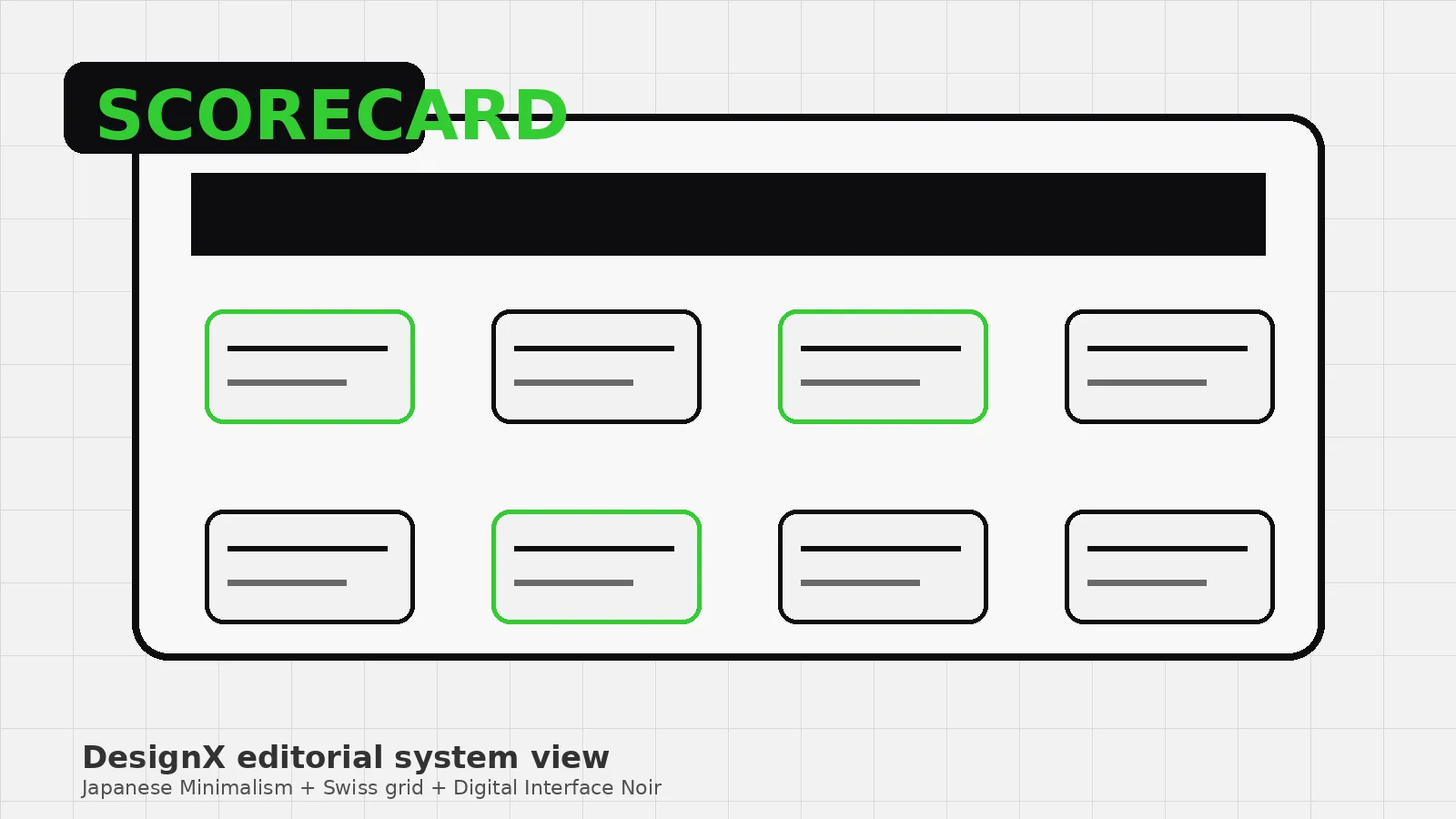
Use this scorecard when reviewing enterprise UX design agency options. Give each category a 1 to 5 score, then discuss the gaps with your buying team.
| Evaluation area | What to look for | Score |
|---|---|---|
| Enterprise workflow depth | Can they map complex roles, approvals, handoffs, and exceptions? | 1-5 |
| Research quality | Do they use real users, real tasks, and representative data? | 1-5 |
| Design system maturity | Can they create reusable patterns and governance, not just screens? | 1-5 |
| Product strategy | Can they connect UX choices to roadmap, adoption, and business outcomes? | 1-5 |
| Accessibility practice | Do they design WCAG-aware flows from the start? | 1-5 |
| Engineering handoff | Are specs, states, constraints, and tradeoffs clear enough to ship? | 1-5 |
| Stakeholder management | Can they work across product, executive, legal, compliance, and engineering groups? | 1-5 |
| Proof of senior talent | Will senior people do the work, or only sell the work? | 1-5 |
The best score is not always the cheapest score. Enterprise UX mistakes tend to show up after the invoice is paid: poor adoption, support burden, rework, missed launch windows, and internal teams that still do not have a design model they can use.
Where DesignX fits
DesignX is a fit when you need a senior design partner for complex UX, UI, SaaS, dashboard, web app, or product experience work. We are especially useful when the product has grown past its original design model and your team needs a clear path forward without months of agency theater.
Our work combines UX strategy, UI design, design systems, brand thinking, and practical delivery support. DesignX has supported teams tied to Klein Tools, Oura Ring, HP, Bodybuilding.com, and Panasonic. For Klein Tools, our catalog redesign contributed to a 23% increase in dealer adoption, a useful reminder that enterprise design work is only valuable when it changes behavior.
If you need deeper background before choosing a partner, these DesignX guides can help:
- Enterprise UX patterns for role-based workflows, dense data, and enterprise interaction models.
- B2B UX design for the gap between buyer needs and daily user needs.
- Design agency pricing guide for budget ranges and cost drivers.
- UX design at DesignX for our broader UX point of view.
Choosing an enterprise UX design agency is not about finding the flashiest portfolio. It is about finding the team that can understand your product’s real complexity, make the right tradeoffs, and give your internal teams a stronger system to build from.
Ready to make enterprise software easier to use, easier to scale, and easier to ship? Let’s talk →
Enterprise UX design agency FAQ
What does an enterprise UX design agency do?
An enterprise UX design agency designs complex software experiences for large organizations, B2B platforms, internal tools, SaaS products, dashboards, portals, and workflow-heavy systems. The work usually includes research, information architecture, role-based flows, UI design, prototyping, design systems, accessibility guidance, and engineering handoff. A good partner also helps product leaders decide what to fix first, what needs deeper structural work, and what can wait.
How is enterprise UX different from regular UX design?
Enterprise UX has more roles, permissions, data density, compliance pressure, and workflow complexity than most consumer products. The user may not be the buyer, the buyer may not use the product daily, and the product may need to support several departments at once. That changes the design approach. Instead of only making a flow intuitive for one user type, enterprise UX has to make complex work understandable across many people and situations.
When should a company hire an enterprise UX design agency?
Hire an enterprise UX design agency when product complexity is slowing adoption, creating support burden, hurting sales demos, delaying releases, or forcing users into workarounds. It is also a smart move before a major product redesign, design system rebuild, platform consolidation, or enterprise sales push. If your team already knows the product is hard to use but cannot agree on what to fix first, an outside senior UX partner can bring structure and momentum.
How much does an enterprise UX design agency cost?
Cost depends on scope, research depth, product complexity, timeline, and the seniority of the team. A focused UX audit or redesign sprint can sit in the five-figure range, while a deeper enterprise product redesign or design system initiative can move into six figures. The more roles, screens, integrations, compliance needs, and stakeholder groups involved, the more discovery and design time the work requires. For context, DesignX publishes broader budget guidance in our design agency pricing guide.
What should we prepare before talking to an enterprise UX partner?
Prepare a short summary of the business goal, current product problem, known user pain, key roles, product screenshots, analytics, support themes, and any technical constraints. If you have sales objections, churn reasons, training materials, roadmap notes, or accessibility concerns, bring those too. The goal is not to create a perfect brief before the call. The goal is to give the agency enough signal to judge whether the problem is a visual design issue, a workflow issue, a system issue, or a deeper product strategy issue.
Should we hire an agency or build an internal enterprise UX team?
An internal team makes sense when you need continuous product design capacity across multiple squads. An agency makes sense when you need senior outside focus, a faster reset, a design system push, or a defined product improvement effort without waiting to recruit every specialty. Many enterprise companies use both. The agency tackles a high-pressure initiative, then leaves behind systems, patterns, and documentation the internal team can carry forward.