


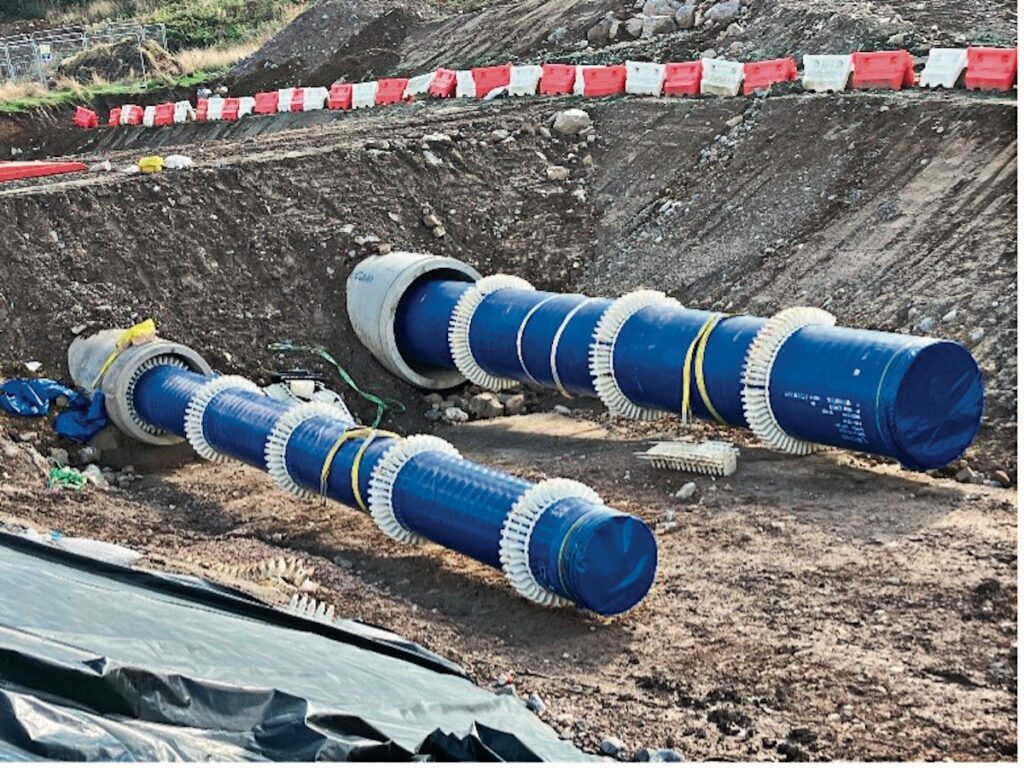
Spacer systems are among the least visible components in a pipeline, but they are fundamental to its performance over time.
In slip-lining and trenchless rehabilitation, a new carrier pipe is installed inside an existing host pipe. But without effective centralisation, the carrier pipe can rest directly against the host pipe wall. This contact creates point loading, uneven grout distribution (if grouting) and long-term structural risk. To remedy this, pipeline spacers are used to maintain consistent annular spacing around the carrier pipe.
Beyond simple alignment, these systems help prevent direct contact between the carrier pipe and casing, reducing wear and maintaining coating integrity if present. They also assist contractors in meeting strict water, wastewater and civil construction standards.
Ultimately, spacers are about safeguarding long-term asset performance, but not all of them are created equal.
Common pitfalls
Traditional metallic spacers introduce a major vulnerability: corrosion. Over time, exposure to moisture and aggressive soils can degrade metal components, undermining both the spacer and the pipeline itself.
Abrasion is another persistent issue. Poor centralisation or high-friction materials can cause damage during installation, stripping coatings or weakening pipe walls before the asset is even commissioned. Temperature fluctuations and chemical exposure further complicate matters, particularly in water and wastewater environments where materials must withstand a wide range of operating conditions.
There are also mechanical risks. Poorly designed spacers can create excessive insertion forces, requiring larger equipment and increasing costs. Uneven load distribution can lead to point loading, while vibration and movement from surrounding infrastructure – such as road or rail crossings – can transfer directly to the pipe, accelerating wear.

The kwik-ZIP advantage
Modern spacer systems, such as those developed by kwik-ZIP, are engineered specifically to address these long-standing challenges. A key differentiator is material selection. Manufactured from kwik-ZIP’s own thermoplastic blend, kwik-ZIP spacers are non-metallic, eliminating the risk of corrosion while offering high resistance to chemicals, heat and abrasion.
Their low coefficient of friction is another key advantage. Pipes can be installed more smoothly, reducing insertion forces, and minimising the risk of damage during pipeline construction. Load-sharing designs further improve performance by distributing weight evenly across multiple runners, avoiding stress concentrations that can compromise both spacer and pipe.
Flexibility is built into the system. Modular, segmented designs allow kwik-ZIP spacers to accommodate a wide range of pipe diameters and configurations, while different runner heights enable precise control and centring in complex installations. Combined with lightweight construction and simple assembly, these features translate into faster installs, lower labour costs and reduced on-site risk.
Picking a proven product
Pipeline projects are high-value, long-life assets, and small oversights can have costly consequences years down the line. In a sector where performance is measured over decades, choosing a partner with a strong history of delivery is imperative.
With more than 25 years in operation, kwik-ZIP has built a track record across a range of industries including civil construction, oil and gas, mining and water. Additionally, its spacer systems are proven on major infrastructure projects around the world.
Equally important is certification and industry acceptance. kwik-ZIP systems are certified to the Water Services Association of Australia’s (WSAA) product specification for casing spacers. They are also approved for use within many utilities’ infrastructure, including Melbourne Retail Water Association, South-East Queensland’s Infrastructure and Materials (IPAM) list, Sydney Water and the WA Water Corporation. All products are certified by the Australian Water Quality Centre (AWQC) for use in contact with drinking water.
Spacer systems may sit out of sight once a pipeline is commissioned, but their impact is long-term. Choosing the right centralising system – and the right partner – can be the difference between a pipeline that works for the time being, and one that endures.
For more information, visit the website.

