Otto Hahn
Facts
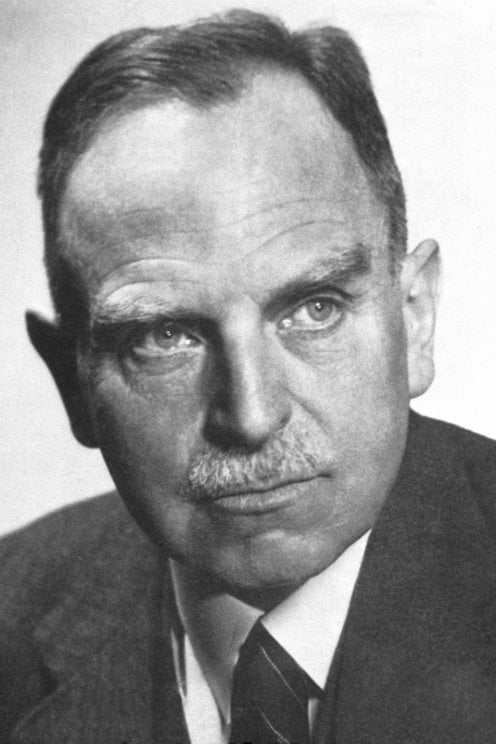
Photo from the Nobel Foundation archive.
Otto Hahn
Nobel Prize in Chemistry 1944
Born: 8 March 1879, Frankfurt-on-the-Main, Germany
Died: 28 July 1968, Göttingen, West Germany (now Germany)
Affiliation at the time of the award: Kaiser-Wilhelm-Institut (now Max-Planck Institut) für Chemie, Berlin-Dahlem, Germany
Prize motivation: “for his discovery of the fission of heavy nuclei”
Otto Hahn received his Nobel Prize one year later, in 1945.
Prize share: 1/1
Work
The discovery of the neutron in 1932 provided a powerful new tool for investigating atoms. When Otto Hahn and Fritz Strassman irradiated uranium with neutrons in 1939, they created barium, which was far too light an element to be a decay product of uranium. Hahn's long-time colleague, Lise Meitner, and her nephew, Otto Frisch, tackled the problem from a theoretical standpoint and proved that the uranium nucleus had been split. The phenomenon, later called “fission”, proved important in developing nuclear weapons and energy.

